How to Change or Reset Your Gmail Password

Changing your Gmail password means changing your Google Account password. Use the normal password page if you know your current password, or use Google Account Recovery if you forgot it.
Your Gmail password is the same password used for your Google Account. That means it also protects other Google services signed in with the same account, such as YouTube, Google Drive, Google Photos, and Google Play. This guide shows how to reset a forgotten Gmail password, change it from the Gmail app on iPhone or iPad, and change it from a desktop browser.
Last checked against current Google Help guidance for password changes, account recovery, strong passwords, 2-Step Verification, and passkeys.
Quick answer
- If you know your current password: Go to your Google Account Security page, choose Password, sign in again if asked, then enter a new password.
- If you forgot your password: Use Google Account Recovery. Google will ask questions or send prompts to confirm the account is yours.
- After the change: Google may sign you out on most devices, so be ready to sign in again with the new password.
- For stronger security: Add recovery info, turn on 2-Step Verification, and consider using a passkey for phishing-resistant sign-in.
- Which Gmail Password Option Should You Use?
- Option 1: Reset Gmail password if you forgot it
- Option 2: Change Gmail password on iPhone or iPad
- Option 3: Change Gmail password on desktop or Chrome
- What Happens After You Change Your Gmail Password
- Security Checklist After Changing Your Password
- Official Google Sources
- Frequently Asked Questions
Which Gmail Password Option Should You Use?
Choose the path based on whether you can still sign in. A normal password change is faster, but account recovery is the right route if the old password is forgotten or someone else may have taken control of the account.
| Situation | Best option | What to prepare |
|---|---|---|
| You know the current password | Change it from Google Account Security | Current password and access to your signed-in device |
| You forgot the password | Use Google Account Recovery | Recovery phone, recovery email, trusted device, or previous password |
| You suspect account theft | Reset password, then run Security Checkup | Recovery info, 2-Step Verification, and device review |
Option 1: Reset Gmail Password if You Forgot It
If you do not know your current password, do not use the normal change-password screen. Start with Google Account Recovery so Google can verify that the account belongs to you.
Step 1 On the Gmail or Google sign-in screen, click Forgot password.
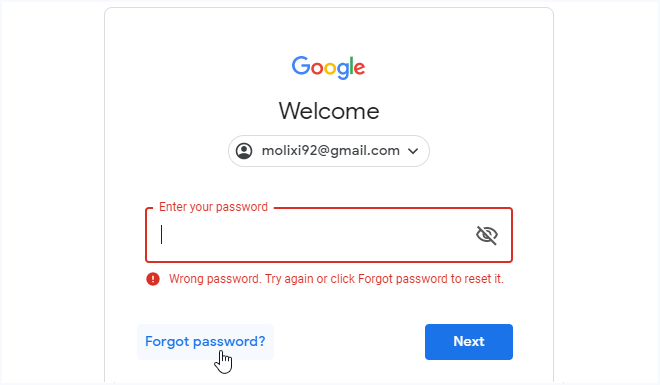
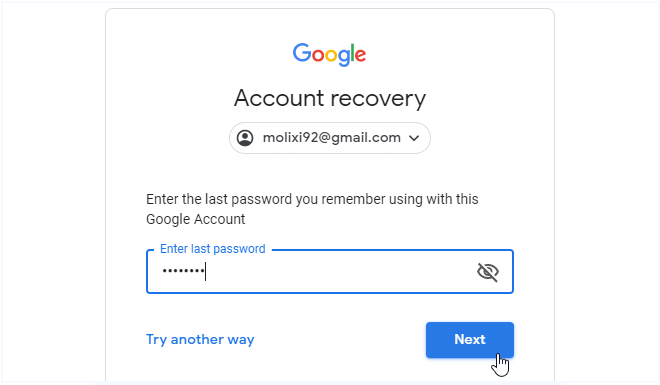
Step 2 On the Account recovery screen, enter the last password you remember. Click Next. If you cannot remember one, click Try another way.
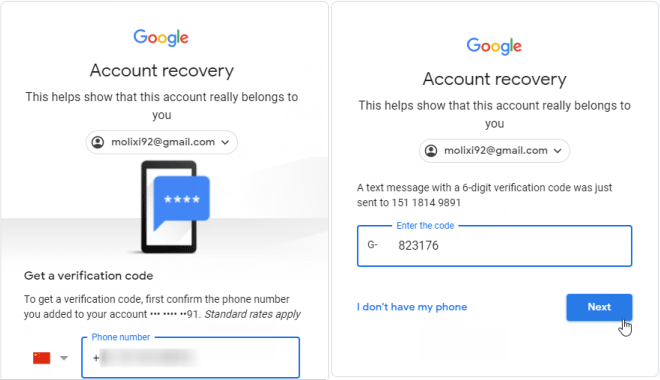
Step 3 Follow the verification prompts. Depending on your account settings, Google may ask you to confirm a phone prompt, enter a code from SMS or email, use an authenticator app, or answer another recovery question.
Step 4 After Google verifies the account, create a new password that you have not already used with this Google Account.
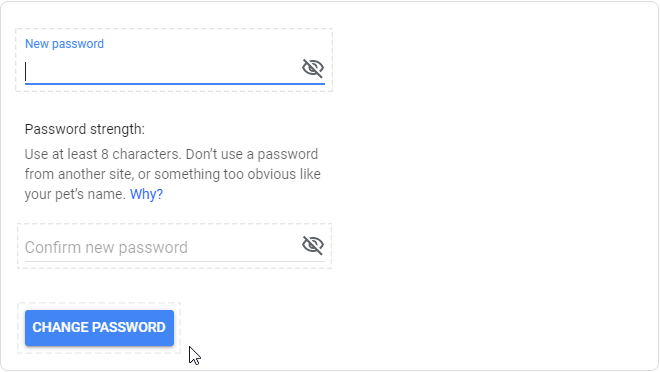
Recovery tip
- Use a familiar device: Try recovery from a device, browser, and location where you have signed in before.
- Check all inboxes: If Google sends a recovery email, check Spam, Bulk Mail, and any email address you may have used with the account.
Option 2: Change Gmail Password on iPhone or iPad
If you know your current password and can open Gmail on your iPhone or iPad, change it through your Google Account settings. Google app labels can vary slightly by Gmail version, but the account path is the same.
Step 1 Open the Gmail app and sign in to the account whose password you want to change.
Step 2 Tap your profile picture or initial in the top right corner.
Step 3 Tap Manage your Google Account. If your Gmail version still shows the side menu first, open Settings, choose the account, then tap Manage your Google Account.
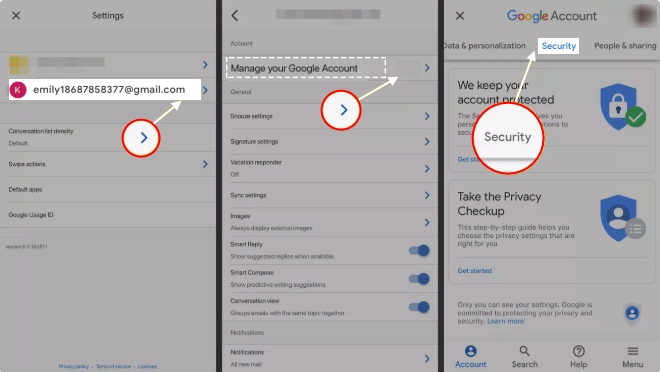
Step 4 Tap Security, then find the How you sign in to Google section.
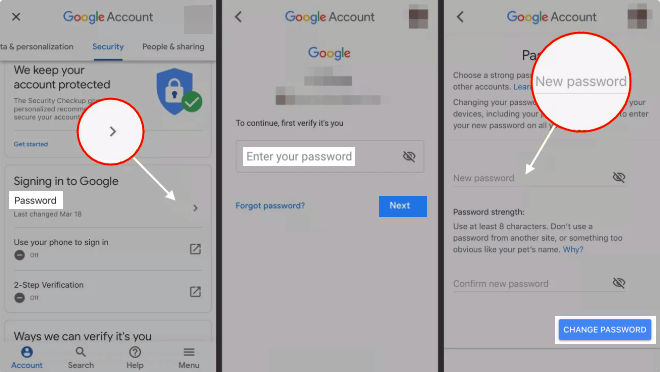
Step 5 Tap Password. Enter your current password again if Google asks you to verify your identity.
Step 6 Enter your new password, confirm it, then tap Change password.
Option 3: Change Gmail Password on Desktop or Chrome
You can change your Gmail password from Chrome, Edge, Firefox, Safari, or any modern browser by opening your Google Account security settings.
Step 1 Go to the Google Account Security page and sign in.
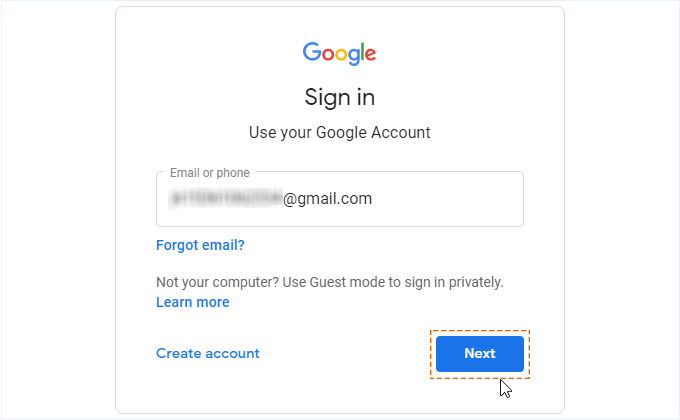
Step 2 In Security, scroll to How you sign in to Google.
Step 3 Click Password. You may need to sign in again to confirm your identity.
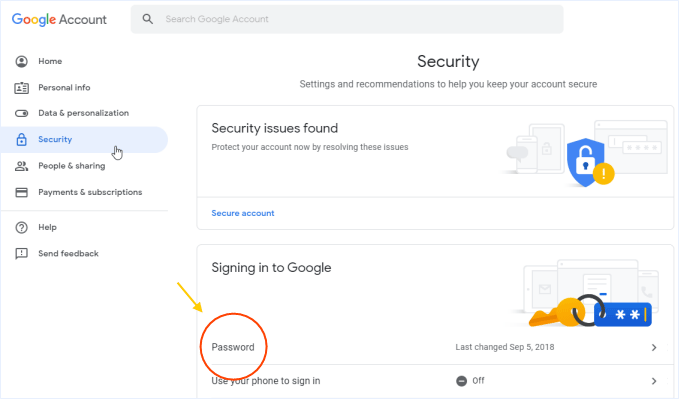
Step 4 Type a new password, confirm it, then click Change Password.
Password tip
- Use a unique password: Do not reuse a password from another website or app.
- Make it long: Google recommends a strong password that is memorable to you but hard for others to guess. Avoid names, birthdays, phone numbers, simple words, and keyboard patterns.
- Use a manager: Save it in Google Password Manager or another trusted password manager instead of writing it in an unsafe place.
What Happens After You Change Your Gmail Password
Google says that changing or resetting your password signs you out everywhere, with a few exceptions. You may stay signed in on devices used to verify it is you, some third-party apps that still have account access, and some home devices that were connected to your Google Account.
After changing the password
- Sign in again: Be ready to enter the new password on your phone, browser, Gmail app, and other Google apps.
- Check app access: If an old app still has access to your account, remove it from your Google Account security settings.
- Update email clients: If you use Gmail in Outlook, Apple Mail, or another mail app, you may need to sign in again or create a new app password if your account requires one.
Security Checklist After Changing Your Password
A password change is a good time to review the rest of your Google Account security settings, especially if you changed it because of suspicious activity.
Secure your account
- Run Security Checkup: Open Google's Security Checkup and review sign-ins, devices, and recommendations.
- Update recovery info: Make sure your recovery email and recovery phone number are current.
- Turn on 2-Step Verification: Add a second sign-in step, such as a prompt, authenticator app, passkey, or security key.
- Add a passkey: A passkey lets you sign in with your device screen lock, fingerprint, face scan, or security key instead of typing a password.
- Use Password Checkup: Check whether any saved passwords are weak, reused, or exposed in a breach.
- Review recent activity: Look for unfamiliar devices, locations, or apps with access to your account.
- Remove unknown devices: If a device or session looks unfamiliar, sign it out from your Google Account security settings.
When to act urgently
- You received a Google alert for a password change you did not make.
- You see emails, filters, forwarding rules, or sent messages you did not create.
- You find an unfamiliar device, location, or third-party app in your account activity.
- Your recovery phone or recovery email was changed without your permission.
Official Google Sources
The steps and security notes above were checked against these official Google resources:
- Gmail Help: Change or reset your password
- Google Account Help: Create a strong password and a more secure account
- Google Account Help: Turn on 2-Step Verification
- Google Account Help: Sign in with a passkey instead of a password
- Google Safety Center: Security tips
- Google Security Checkup
- Google Password Manager and Password Checkup
Frequently Asked Questions
Q: Is my Gmail password the same as my Google Account password?
A: Yes. Gmail uses your Google Account password. If you change it, the new password applies to Google services that use that account, including Gmail, YouTube, Drive, Photos, and Google Play.
Q: Can I change my Gmail password without my old password?
A: If you do not know the old password, use Google Account Recovery. Google will try to verify your identity with recovery information, trusted devices, previous passwords, or other prompts.
Q: Will I be signed out after changing my Gmail password?
A: Usually yes. Google says you will be signed out everywhere except certain verification devices, some third-party apps with access, and some helpful home devices.
Q: Should I let Chrome remember my Gmail password?
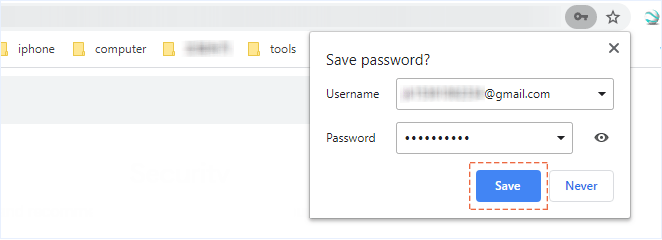
A: You can use Google Password Manager or another trusted password manager to store a strong, unique password. Avoid saving the password on shared or untrusted devices.
Q: Should I use a passkey after changing my Gmail password?
A: Yes, if your devices support it. A passkey can make Google Account sign-in more resistant to phishing because it uses your device screen lock, fingerprint, face scan, or security key instead of a typed password.
Q: What should I do if I changed my password because someone else may know it?
A: Run Google Security Checkup, update recovery information, enable 2-Step Verification, review recent activity, and remove unfamiliar devices or third-party app access.
Related Articles
-
![Google selfie video sign-in setup and security]() Google Selfie Video Sign-In: Setup, Safety &
Privacy
Google Selfie Video Sign-In: Setup, Safety &
Privacy
-
![check if your Gmail account was pwned]() Is Your Gmail Pwned? How to Check
and Fix It
Is Your Gmail Pwned? How to Check
and Fix It
-
![recover Google account password]() How to Retrieve a
Forgotten Google Account Username and Password
How to Retrieve a
Forgotten Google Account Username and Password
-
![use Google Results About You]() How to Use Google's Results About You to
Track and Protect Your Personal Data
How to Use Google's Results About You to
Track and Protect Your Personal Data
-
![View password saved in Chrome]() How to See Saved Passwords in Google
Chrome
How to See Saved Passwords in Google
Chrome
-
![Protect saved passwords in Chrome]() How to Protect Saved Passwords in
Chrome
How to Protect Saved Passwords in
Chrome